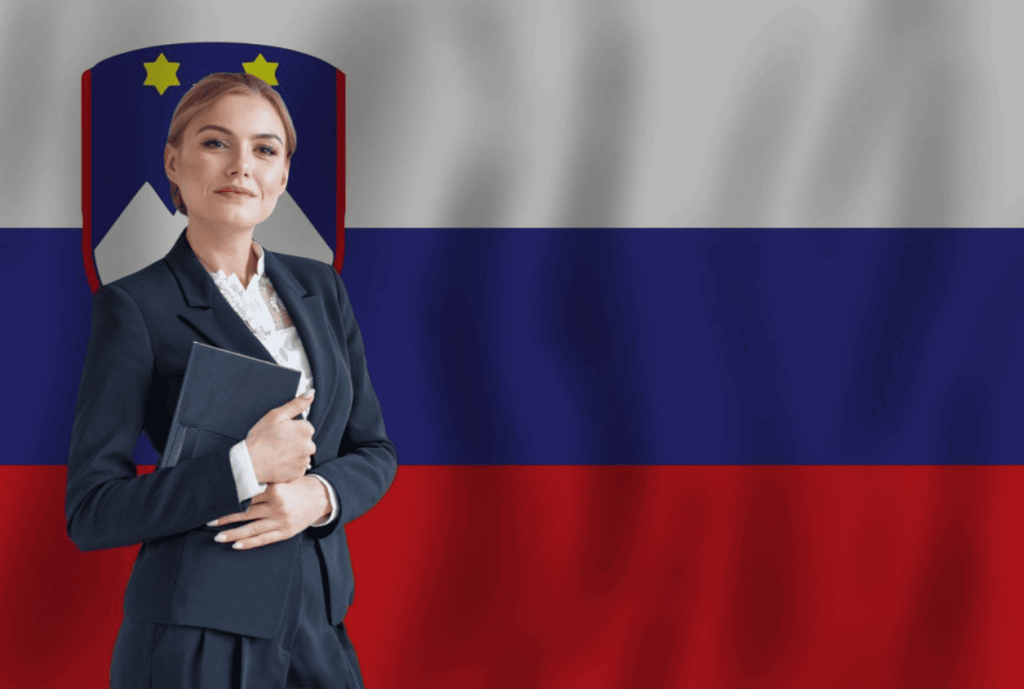

Obtaining a Slovenian passport is strictly regulated by national legislation, and all applications are processed only by state authorities. As an EU member state, Slovenia provides its citizens with the right to move, reside, and work across the European Union, and these rights can only be granted through legally confirmed citizenship.
Eligibility and required documents for obtaining Slovenian citizenship
Slovenian law outlines several routes to citizenship, each based on specific legal criteria. Applicants must demonstrate that they meet the conditions applicable to their route and provide supporting documentation.
Key eligibility criteria commonly include:
- Verified Slovenian or EU ancestry (for citizenship by descent).
- Documented long-term legal residence (for naturalization).
- Absence of a criminal record.
- Proof of financial stability and lawful residence.
The documentation package may include:
- Birth and marriage certificates.
- Evidence of Slovenian heritage or continuous residence.
- Valid identification documents.
- Certified Slovenian translations.
- Confirmation of a clean legal background.
Unioncitizenship assists applicants in preparing materials in the correct legal format, ensuring that documents meet administrative standards and reducing the likelihood of delays due to technical errors.
Step-by-step procedure with Unioncitizenship.com
The citizenship application process can involve multiple administrative steps. Unioncitizenship.com provides a structured approach, review updates, and communication with specialists.
The general workflow includes:
- Eligibility assessment
- Documents preparation
- Submission of the papers to the appropriate authorities
- Monitoring of the case and updates
- Support in passport registration process
Each stage follows official state procedures. Licensed lawyers, certified translators, and relevant specialists may take part to ensure that all materials are properly formatted and compliant with administrative requirements.
Does the company comply with Slovenian and EU legislation?
Unioncitizenship states that all preparation and submission steps follow the requirements of Slovenian citizenship legislation. To make this point objective, it is important to refer not only to the company’s own statements, but also to external legal sources that anyone can verify.
- Legal basis for citizenship procedures
All applications for citizenship in Slovenia are regulated by generally accepted laws, in particular:
-
- Zakon o državljanstvu Republike Slovenije (ZDČS) – the Slovenian Citizenship Act, which defines conditions, grounds, and administrative steps for acquiring citizenship.
- Zakon o upravnem postopku (ZUP) – General Administrative Procedure Act, which governs how public authorities must accept, process, and decide on applications.
- EU legal framework, including freedom of movement and residency rights for EU nationals (Directive 2004/38/EC), which indirectly shapes parts of the administrative approach.
Any company that prepares documents, including Unioncitizenship, must operate within these frameworks, because the final decision is always made exclusively by:
-
- The Ministry of the Interior of Slovenia (MNZ), and
- The Administrative Units (Upravne enote) where applications are officially filed.
- Verification through government channels
Applications do not pass through private intermediaries. They are submitted only through recognized state institutions, where applicants can personally confirm:
-
- the receipt of documents,
- the applicable legal articles referenced in their file,
- processing timelines defined by ZUP,
- statutory conditions defined in ZDČS (residency, language exam, integration requirements, etc.).
This structure ensures that no unofficial or parallel routes exist – all actions are traceable to specific points in Slovenian law.
- External confirmation of compliance
Objective checks that applicants can use:
-
- Official portals of the Slovenian Government (gov.si), where all laws, procedures, and requirements are publicly accessible.
- Upravna enota provide written confirmation of accepted applications and list the exact legal provisions used in the decision-making process.
- EU legal databases (EUR-Lex) allow verification of all EU directives and regulations that may apply.
Because decision-making authority never leaves the state process, applicants can directly verify every step against these official sources, independently of any company’s interpretation.
Unioncitizenship reviews – approach overview
A range of Unioncitizenship reviews published across different platforms provides insight into how clients perceive the service. Feedback often focuses on the organizational aspects: timely communication, systematic document handling, and the ability to track application stages through the platform.
Although individual outcomes differ – as citizenship cases depend on personal legal grounds – many reviewers note that the structured guidance helps them manage a complex administrative process more confidently. Comments frequently highlight the clarity of instructions and the predictability of the workflow.
These observations help potential applicants understand what to expect when using the service and how the process works in practice.
Summary and conclusions
The procedure for obtaining a Slovenian passport remains entirely within the scope of Slovenian and EU law. Unioncitizenship operates as an organizational and administrative support service, helping applicants navigate official steps, prepare documents correctly, and follow legally recognized procedures.
Through structured workflows, transparency, and documented compliance with national regulations, the company offers practical assistance to individuals pursuing Slovenian citizenship. Publicly available Unioncitizenship reviews further illustrate how clients experience the process, giving an additional point of reference for evaluating the service.
FAQ
Can a private company issue or guarantee a Slovenian passport?
No. Slovenian passports and citizenship can only be granted by authorized state institutions. Unioncitizenship provides administrative and document-preparation support but cannot influence or guarantee the final decision.
Who makes the final decision on a Slovenian citizenship application?
The final decision is made exclusively by the competent Slovenian authorities, including the Ministry of the Interior and the relevant Administrative Unit. Private service providers may assist with preparation, but they do not have decision-making authority.
What are the main ways to obtain Slovenian citizenship?
The available routes may include citizenship by descent, naturalization based on long-term legal residence, marriage, or other grounds established by Slovenian legislation. The applicable conditions depend on the applicant’s personal circumstances.
Is Slovenian ancestry sufficient to obtain citizenship?
Slovenian ancestry may provide a legal basis for an application, but it does not automatically guarantee approval. Applicants must provide official documents confirming the family connection and meet any additional legal requirements applicable to their case.
How long does the Slovenian citizenship process take?
Processing times vary depending on the legal basis, the completeness of the application, the responsible Administrative Unit, and whether additional documents are requested. Applicants should rely on official information from the competent authority for current processing estimates.
Which documents are usually required?
The document package may include birth and marriage certificates, valid identification, proof of residence, evidence of Slovenian ancestry, criminal record certificates, financial documents, and certified translations. The exact list is determined by the applicant’s citizenship route.
Do foreign documents need to be translated into Slovenian?
In most cases, foreign-language documents must be translated into Slovenian by an authorized or certified translator. Certain documents may also require legalization or an apostille, depending on the country where they were issued.
Is knowledge of the Slovenian language required?
Language requirements depend on the legal basis of the application. Some naturalization routes may require proof of Slovenian-language proficiency, while exemptions or different conditions may apply in other cases.
Can an application be submitted entirely through Unioncitizenship.com?
The company may assist with eligibility assessment, document preparation, translations, and procedural guidance. However, the official application must be submitted through the legally authorized Slovenian state channels.
How can applicants verify that the procedure is legal?
Applicants can verify requirements through official Slovenian government portals, the relevant Administrative Unit, the Ministry of the Interior, and EU legal databases such as EUR-Lex. Official authorities can also confirm whether an application has been received and which legal provisions apply.
Does Unioncitizenship.com guarantee a successful application?
No legitimate service provider can guarantee citizenship or passport approval. The outcome depends on the applicant’s eligibility, supporting evidence, compliance with legal requirements, and the decision of the competent Slovenian authorities.
What support does Unioncitizenship provide?
Unioncitizenship may assist with an initial eligibility review, preparation of documents, certified translations, organization of the application package, communication with specialists, and monitoring of administrative updates.
Are Unioncitizenship.com reviews proof that an application will be approved?
No. Reviews describe individual experiences with the service, communication, and document-handling process. They do not guarantee that another applicant will receive citizenship, because every case is evaluated separately by the Slovenian authorities.